




















Hake’s Auctions, York, Pennsylvania
Photos courtesy Hake’s Auctions
“On yearly trips to London, American collector Rex Stark assembled what is arguably the finest collection of antislavery material on this side of the Atlantic,” said Scott Mussell, who brought the collection to auction at Hake’s Auctions for an online-only sale that ended June 23. Mussell included consignments of civil-rights material from other consignors that covered the history of the fight for civil rights from the time of the British Society for the Abolition of the Slave Trade though the Martin Luther King Jr. era and included a few buttons and posters from Barack Obama’s runs for Congress, the Senate, and president. The sale of 366 lots brought an impressive $472,118 (includes buyers’ premiums). Mussell said buyers were institutions and private collectors.
In a video posted on the Hake’s website, Mussell reminded prospective bidders that in 1787 Josiah Wedgwood made jasperware cameos of a kneeling black man in chains asking “Am I not a man and a brother?” The imagery, designed for the Society for the Abolition of the Slave Trade in England and made at Wedgwood’s Etruria pottery in Staffordshire, decorated pendants, adorned tea caddies, and became the symbol of the British abolition movement and America’s fight for civil rights.
Wedgwood sent a few hundred abolition cameos to Benjamin Franklin, president of the Pennsylvania Society for the Abolition of Slavery. Franklin, who then distributed them to his friends, reportedly said they “may have the effect equal to that of the best written pamphlet in procuring favour to those oppressed people.” The message of the fight for human liberty appeared on transferware china, and Staffordshire figures of the characters in Harriet Beecher Stowe’s novels and Parian ware figures and portraits of abolitionists were produced. Rex Stark (1947-2023) made pursuing abolition material his passion.
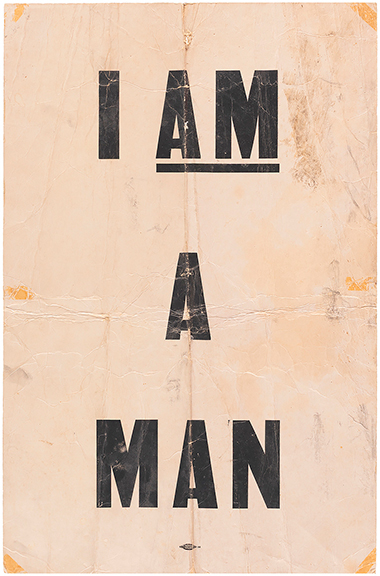
This iconic placard, “I AM A MAN,” 21¼" x 13¾", circa 1968, used by protestors during the Memphis Sanitation Workers strike, is one of two designs to feature the slogan. This variant features three lines of script corresponding to the Martin Luther King Memorial March for Union Justice and to End Racism in Memphis, Tennessee, on April 8, 1968. Only a handful of any examples have reached the market. Desirable in any condition, this example has honest wear from hard use. It sold for $58,427 (est. $10,000/20,000).
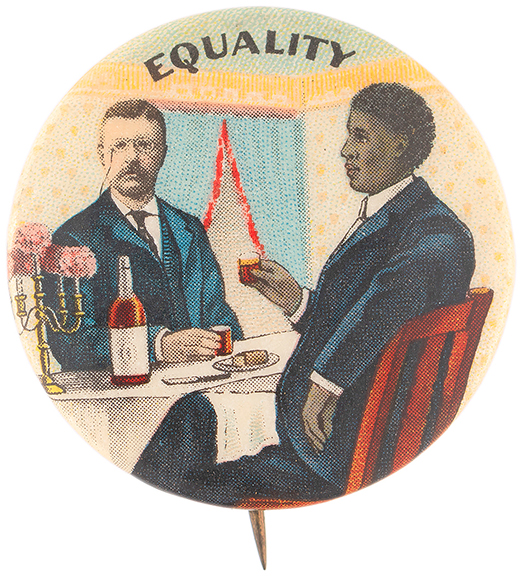
This 1¼" diameter full-color button depicting Theodore Roosevelt and Booker T. Washington at a historic White House dinner held October 16, 1901, commemorates the first time a black man was invited to dine at 1600 Pennsylvania Avenue. The depiction of Washington casually seated, sharing a drink from a prominently placed bottle of liquor, indicates that this design was satirical in nature for the 1904 presidential campaign. It sold for $14,401 (est. $7000/10,000).
The auction resulted in some strong prices. An antebellum Copeland Parian figure by the black sculptor Eugene Warburg of Uncle Tiff, a character from Harriet Beecher Stowe’s novel Dred, cradling a child while darning a sock, sold to a museum for $95,592. A cardboard placard reading “I Am A Man” from the 1968 Memphis Sanitation Workers strike went for $58,427, and a broadside from Frederick Douglass’s 1872 Republican rally in Wiscasset, Maine, which had survived a rainstorm, sold for $25,486. A pinback button depicting a full-color image of Theodore Roosevelt and Booker T. Washington at a historic October 16, 1901, White House dinner, the first time a black person dined at 1600 Pennsylvania Avenue, brought $14,401.
The rest of Rex and Patti Stark’s collection and more civil-rights material will be offered by Hake’s Auctions in 2027. For more information, visit (www.hakes.com) or call Scott Mussell at (515) 707-7250.
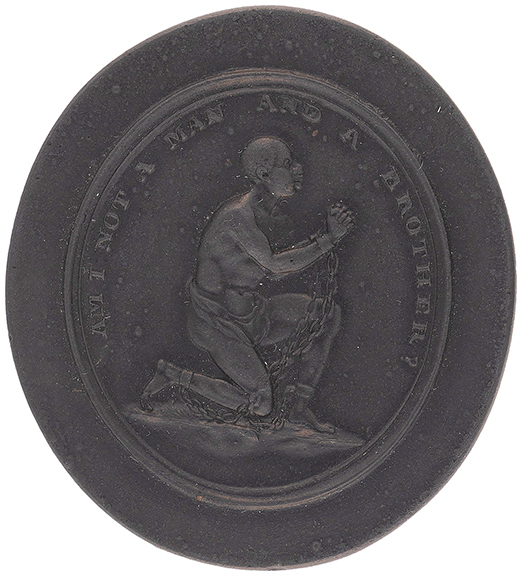
This late 18th-/early 19th-century Wedgwood black basalt oval medallion was designed by Josiah Wedgwood and others for the Society for the Abolition of the Slave Trade in 1787. Marked “Wedgwood,” it depicts an enslaved man pleading for humanity. Text above him reads “Am I Not A Man And A Brother?” Measuring 1½" high, it sold for $2291 (est. $1000/3000). As a sign of allegiance to the cause, these tokens became de rigueur for both the British and American antislavery set. Benjamin Franklin received a few hundred medallions shortly after their production and praised them as an effective tool for propaganda akin to the written pamphlet. This one is an unusual variant with a defined border. Rex and Patti Stark collection.
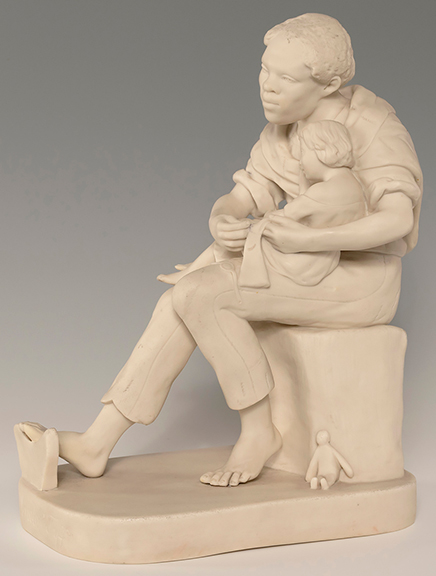
Copeland Parian statuette, circa 1856, 12" x 9", of Uncle Tiff, a character from Harriet Beecher Stowe’s novel Dred, by black sculptor Eugene Warburg (1825-1859), sold for $95,592 (est. $10,000/20,000). It was the top lot in the sale and set an auction record price for the artist. Warburg was born in New Orleans to an enslaved mother and a father of German descent. Manumitted by his father in his youth, Warburg trained as a stone cutter, learning the art of memorial sculpture before traveling to Europe to further his artistic career. The Duchess of Sutherland, an ardent abolitionist, commissioned Warburg to do a series of works based on Harriet Beecher Stowe’s antislavery novels. Uncle Tiff, the paternal figure in Dred, is rocking a cradle with his foot while darning a sock and cradling a child. Produced for 31 shillings and six pence, this is one of three extant examples. Another example is in the collection of the Walters Art Museum, Baltimore, Maryland. Rex and Patti Stark collection.
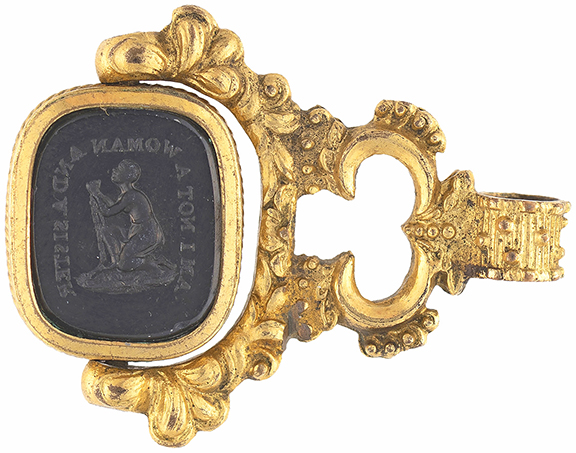
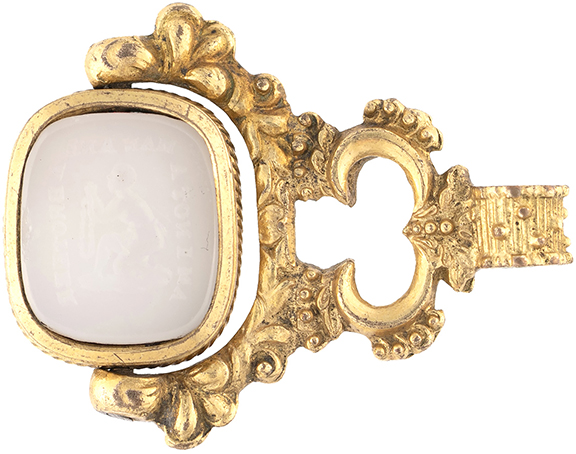
Wedgwood double-sided antislavery “Am I Not A Man And A Brother?” and “Am I Not A Woman And A Sister?” seal fob, 1½" x 1¼", circa 1830, sold for $5530 (est. $2000/5000). The black side is the male version of the William Hackwood design for Wedgwood, and the white gem is the female version. The seal fob was included in the Metropolitan Museum of Art’s exhibition Fictions of Emancipation: Carpeaux Recast. Rex and Patti Stark collection.'
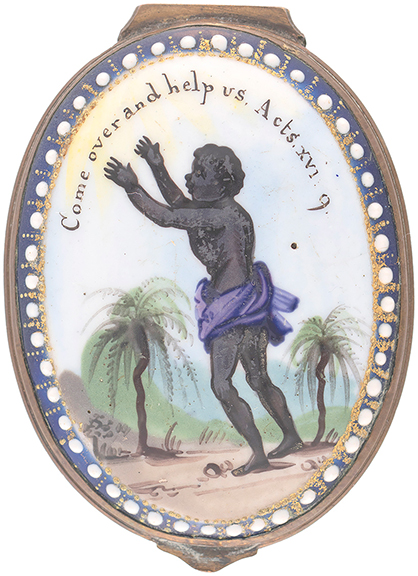
Battersea oval enamel patch box with a hand-painted porcelain insert in a brass box lid with a cobalt-painted base and mirror, 2.4" high, circa 1800, with an enslaved man reaching skyward and the Biblical passage “Come over and help us” (Acts 16:9), sold for $2520 (est. $1000/3000). Rex and Patti Stark collection.
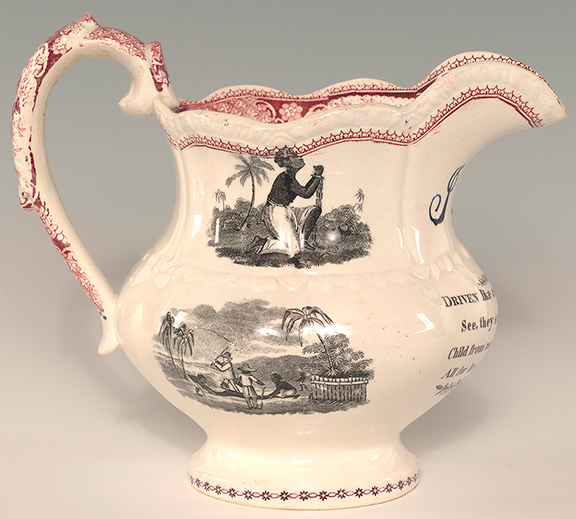
Staffordshire tricolor transferware pitcher with scenes of the trials of slaves, 6½" high, circa 1840, sold for $3355 (est. $1000/2000). Under the initials “J.W.” the text reads “Driven like cattle to a fair / See, they sell us, young and old, / Child from mother too they tear. / All for the love of filthy gold.” The black transferware prints are depictions of a kneeling slave, a man being whipped by a white slave owner, an overseer and slave in a field, and a slave auction with numerous children. Rex and Patti Stark collection.
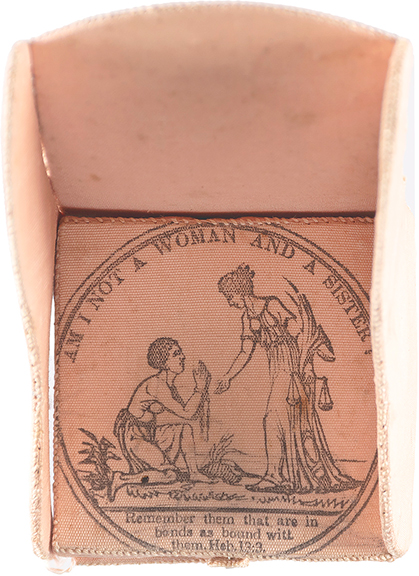
Anti-Slavery Society pink silk pincushion reading “Am I Not a Woman and a Sister?,” 2" x 2", 1830s-40s, sold for $2963 (est. $800/1200). It pictures Justice ministering to an enslaved woman above the Biblical passage “Remember them that are in bonds as bound with them” (Hebrews 13:3) and an illustration culled from The Slave’s Friend, a publication of the American Anti-Slavery Society. It is a link between abolition and women’s rights. Rex and Patti Stark collection.
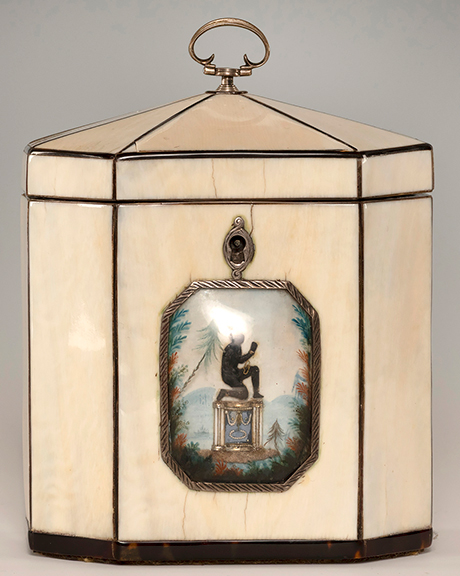
Antislavery inlaid octagonal tea caddy, 5" x 4" x 2¾", 1820s, sold for $16,285 (est. $4000/6000). It has shell and horn stringing with inlaid bone panels and a wax figure of a kneeling slave in chains atop a pedestal against a painted bone background framed in silver. It came with a domed glass cover (not shown). Sugar consumption linked tea to the transatlantic slave trade. The tea caddy documents efforts by female abolitionists to boycott slave-produced sugar. Rex and Patti Stark collection.
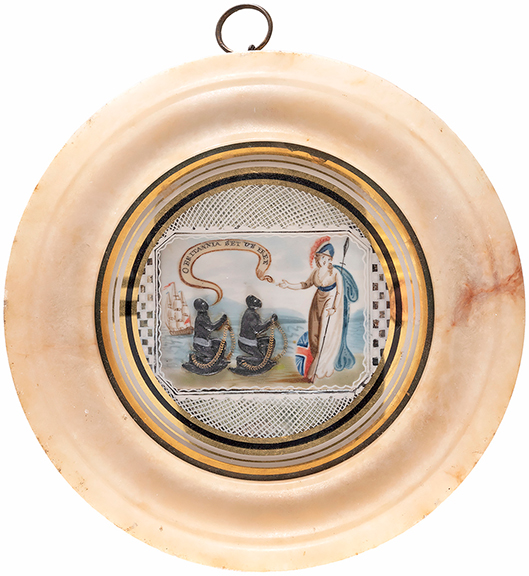
Antislavery alabaster plaque, 1810-30, wax, bone, and applied paint under a verre églomisé dome with an alabaster frame, 5½" diameter, sold for $2347 (est. $2000/3000). It has two kneeling wax figures, enslaved and bound, whose appeal—“O Britannia Set Us Free”—is on the waving banner. Rex and Patti Stark collection.
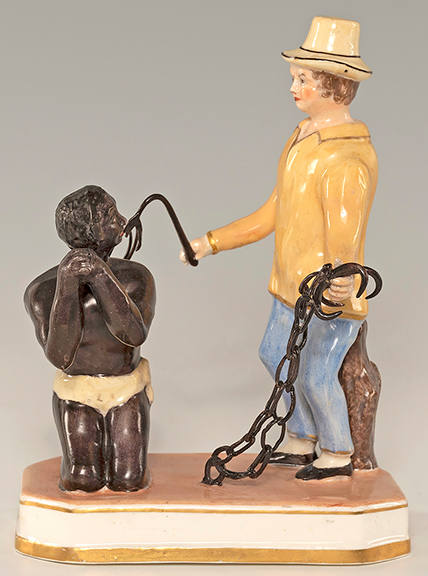
Circa 1820 Staffordshire figure of an enslaved man being whipped, 6¼" tall, sold for $3515 (est. $5000/10,000). The slave master holds the chains. This and the companion piece, a jubilant man with the whip and chains at his feet, are the only known examples recorded in the books on Staffordshire figures. Rex and Patti Stark collection.
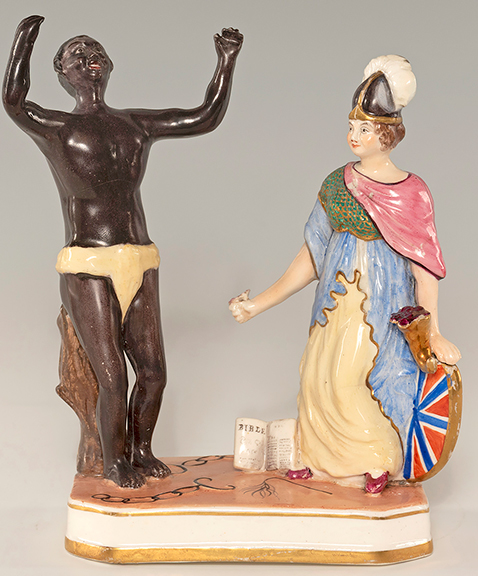
This Staffordshire figure, Freedom for the Slave with Britannia, circa 1830, with the discarded tools of oppression, a whip and chains, lying broken on the ground and with Britannia clutching a shield is the only known example. It sold for $9125 (est. $5000/10,000). Rex and Patti Stark collection.
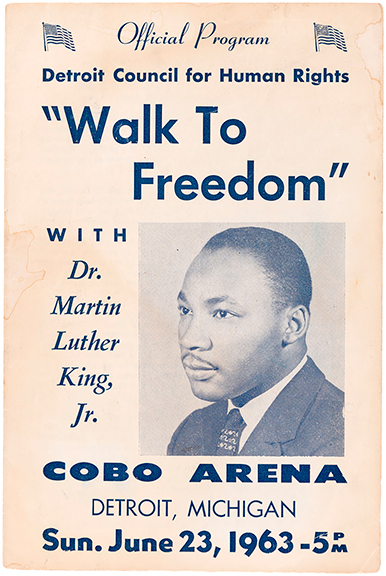
This eight-page official program of the “Walk To Freedom” rally with Dr. Martin Luther King Jr. at Cobo Arena in Detroit, Michigan, 1963, 9¼" x 6¼", sold for $2963 (est. $800/1200). With over 125,000 participants, the largest civil-rights rally up to that time, the June 23 event was hosted by a newly formed coalition—the Detroit Council for Human Rights—made up of members of CORE, NAACP, and local spiritual, business, and cultural leaders of Detroit. It cemented prominent support behind Dr. King and enabled the success of the March on Washington two months later.
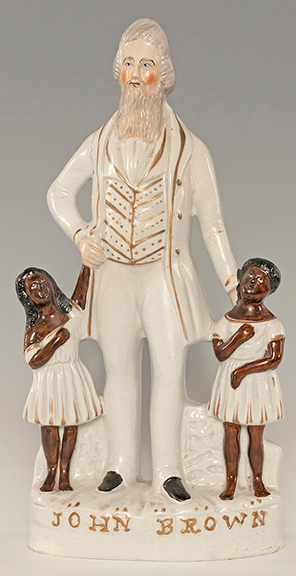
This Staffordshire figure of abolitionist John Brown with two black children, 11" tall, circa 1860, in hand-painted enamel casts a rosy-cheeked Brown in the role of paternal safeguard, rejecting the dominant narrative of unhinged firebrand. His name is embossed on the base. It sold for $1720 (est. $1000/2000) despite cracks and crazing. Rex and Patti Stark collection.
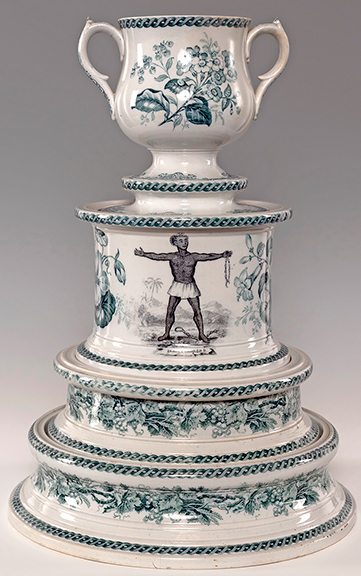
Six-piece nesting blue-green transferware set in a tiered wedding-cake style, 15" high overall, with antislavery subjects and a verse, a double-handled cup with botanical transfers, and the central pot featuring a dramatically unchained slave in black transfer over words from Isaiah 58:6, the Biblical justification for abolition, “Set the oppressed free,” sold for $5027 (est. $2000/5000). Rex and Patti Stark collection.
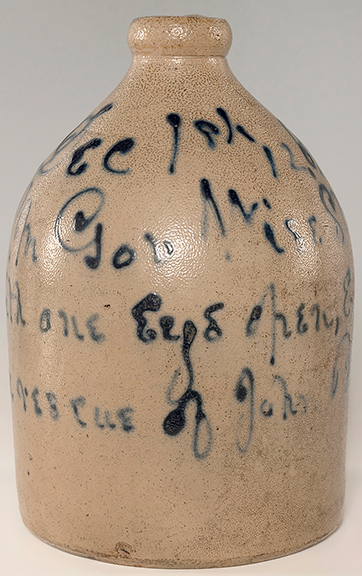
Stoneware jug, 11½" x 7", 1859-60, with a cobalt inscription reading “Dec. 1st. 12 O’clock / P.M. Gov. Wise Sleeps / With One Eye Open Expecting / The Rescue of John Brown.” An anonymous letter, prescient in sentiment, was received by Governor Henry A. Wise of Virginia in the months preceding the execution of John Brown, stating “A war Mr. Wise has commenced that you cannot stop, a fire has broken out that you cannot quench. You may prepare for death. I write for Legion, for we are many.” The jug commemorates Governor Wise on the day preceding the execution of John Brown, mired in apprehension, “sleeping with one eye open.” It sold for $7260 (est. $10,000/20,000). Rex and Patti Stark collection.
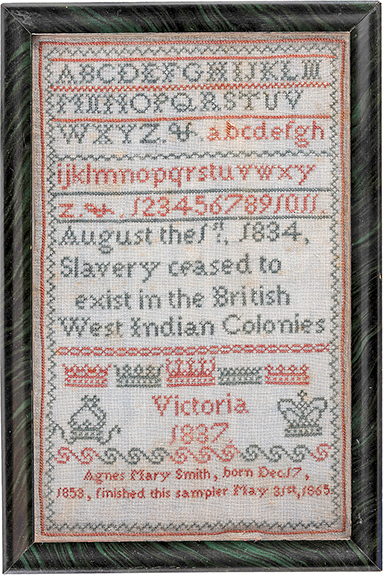
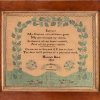
English schoolgirl sampler, 18" x 12", with an antislavery message particular to the British colonies, “August the 1st, 1834, / Slavery ceased to / exist in the British / West Indian Colonies,” with gray and red crowns and “Victoria / 1837,” a reference to the queen’s ascension date. It was stitched by Agnes Mary Smith, “born Dec. 17th 1853,” who “finished this sampler May 31st, 1865.” Her father, Edwin Trevelyan Smith, was a clergyman with ties to Barbados, according to a previous owner. The thoughtful recognition of the Slavery Abolition Act of 1833 wrought by a young British girl sold for $5027 (est. $3000/5000). Rex and Patti Stark collection.
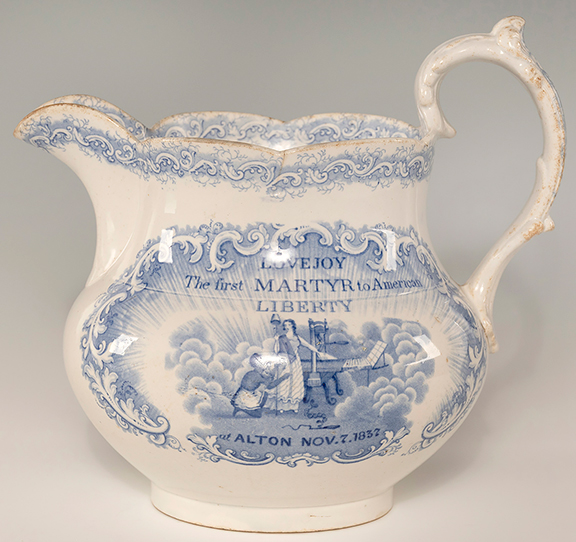
“Lovejoy / The First Martyr To American / Liberty,” a Staffordshire blue transferware ceramic pitcher, 6¾" high to the spout, 9" wide from spout to handle, sold for $1892 (est. $1000/3000). On the front Lady Liberty stands next to a printing press with a classic abolitionist symbol, a kneeling black man, at her feet and a discarded whip at bottom center. The text of the First Amendment of the U.S. Constitution is on the reverse. American abolitionist minister and newspaper editor Elijah Lovejoy was murdered by a mob of proslavery advocates while defending his printing press in Alton, Illinois. Lovejoy’s murder transfixed abolitionists across the nation. Abraham Lincoln, speaking against slavery in 1838 at the Young Men’s Lyceum of Springfield, Illinois, decried tactics of mob violence, a veiled reference to Lovejoy’s gruesome death. Lovejoy’s death had a profound impact on John Brown. Rex and Patti Stark collection.
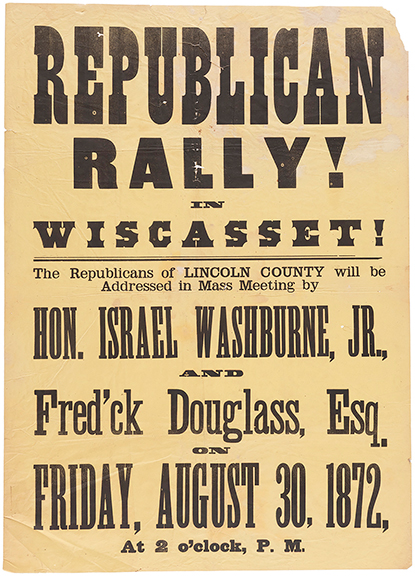
Rare thin canary yellow broadside, 29" x 21", advertising an 1872 Republican rally in Wiscasset, Maine, with featured speakers Frederick Douglass and Hon. Israel Washburn Jr., sold for $25,486 (est. $10,000/20,000). Rex and Patti Stark collection.
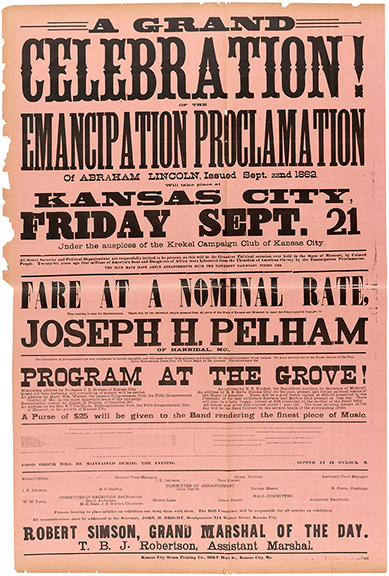
This 1888 broadside announces “A Grand Celebration! / Of The / Emancipation Proclamation,” to be held September 21 in Kansas City, Missouri. The broadside reads “All Secret Societies and Political Organizations are respectfully invited to be present, as this will be the Grandest Political occasion ever held in the State of Missouri, by Colored People. Twenty-Six years ago four millions of America’s Sons and Daughters of Africa were Liberated from the Thraldom of American Slavery by the Emancipation Proclamation.” Events included a “Grand old time barbecue,” a musical contest with a $25 purse “to the Band rendering the finest piece of music,” and another contest with a gold watch valued at $50 to be awarded to “the President of the Best uniformed Harrison and Morton Club present.” Printed by the Kansas City Steam Printing Co., it measures 41¾" x 27¼" and is the only example known. It sold for $2082 (est. $1000/2000). Rex and Patti Stark collection.
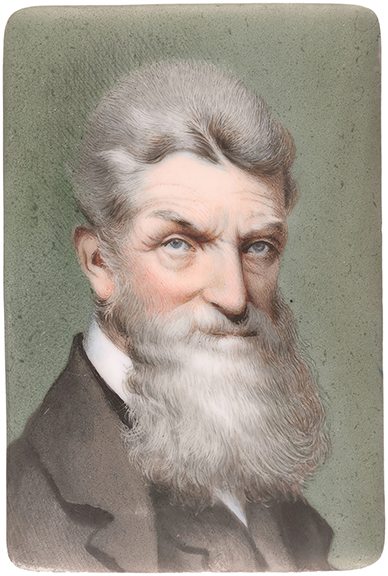
Ceramic miniature portrait of John Brown, after an M. Lawrence daguerreotype, stamped “108” on the reverse, 4¾" x 3¼", 1859-60, sold for $6691 (est. $2000/5000). Rex and Patti Stark collection.
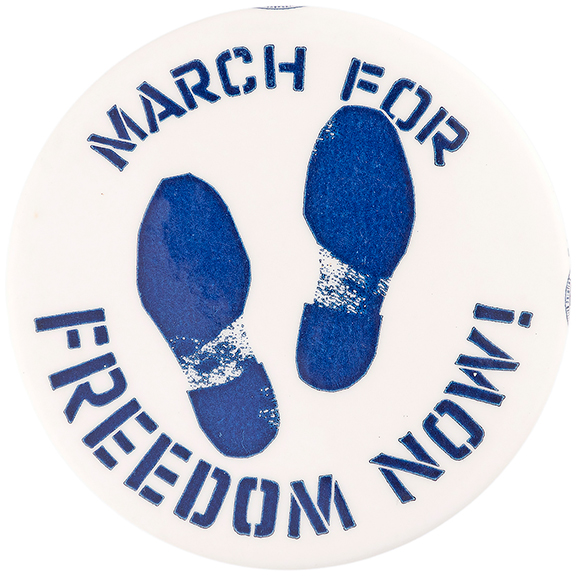
This rare “March For Freedom Now!” protest button from the 1960 Chicago Republican National Convention, 2½" diameter, was from a demonstration led by Martin Luther King Jr. It sold for $4774 (est. $800/1200).
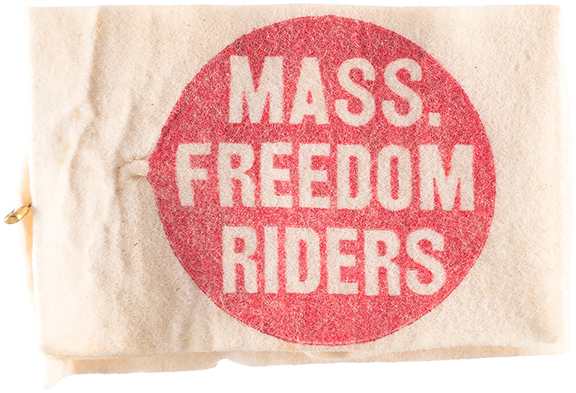
This 1961 felt armband, bound with a safety pin closure, reads “Mass. Freedom Riders” in a red circle. It is an artifact of the Congress of Racial Equality (CORE), which sponsored freedom rides that sought to integrate mass transit in the segregated South. It is 5½" wide and sold for $1805 (est. $400/700).
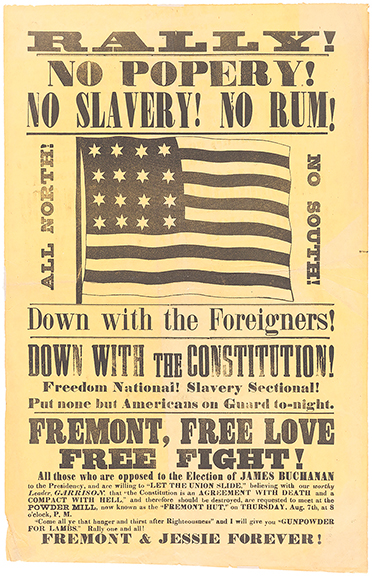
This pro-Buchanan “Down With The Constitution!” broadside, 19" x 12", jabs at the American (Know Nothing) and Republican Party positions on some of the key issues in the 1856 presidential election, pertaining to the Republicans’ strong antislavery stance and the American Party’s planks on Catholics and immigrants. It reads in part “Down with the Foreigners! / Down With The Constitution! / Freedom National! Slavery Sectional! Put none but Americans on Guard to-night.” It sold for $10,038 (est. $5000/10,000). Another sold at Heritage Auctions in October 2022 for $11,875. The Heritage catalog named Buchanan’s opponents, Republican John Frémont, Know Nothing candidate Millard Fillmore, and abolitionist William Lloyd Garrison. It is a satirical broadside announcing a fake gathering of Buchanan opponents. Rex and Patti Stark collection.

Originally published in the October 2026 issue of Maine Antique Digest. © 2026 Maine Antique Digest